
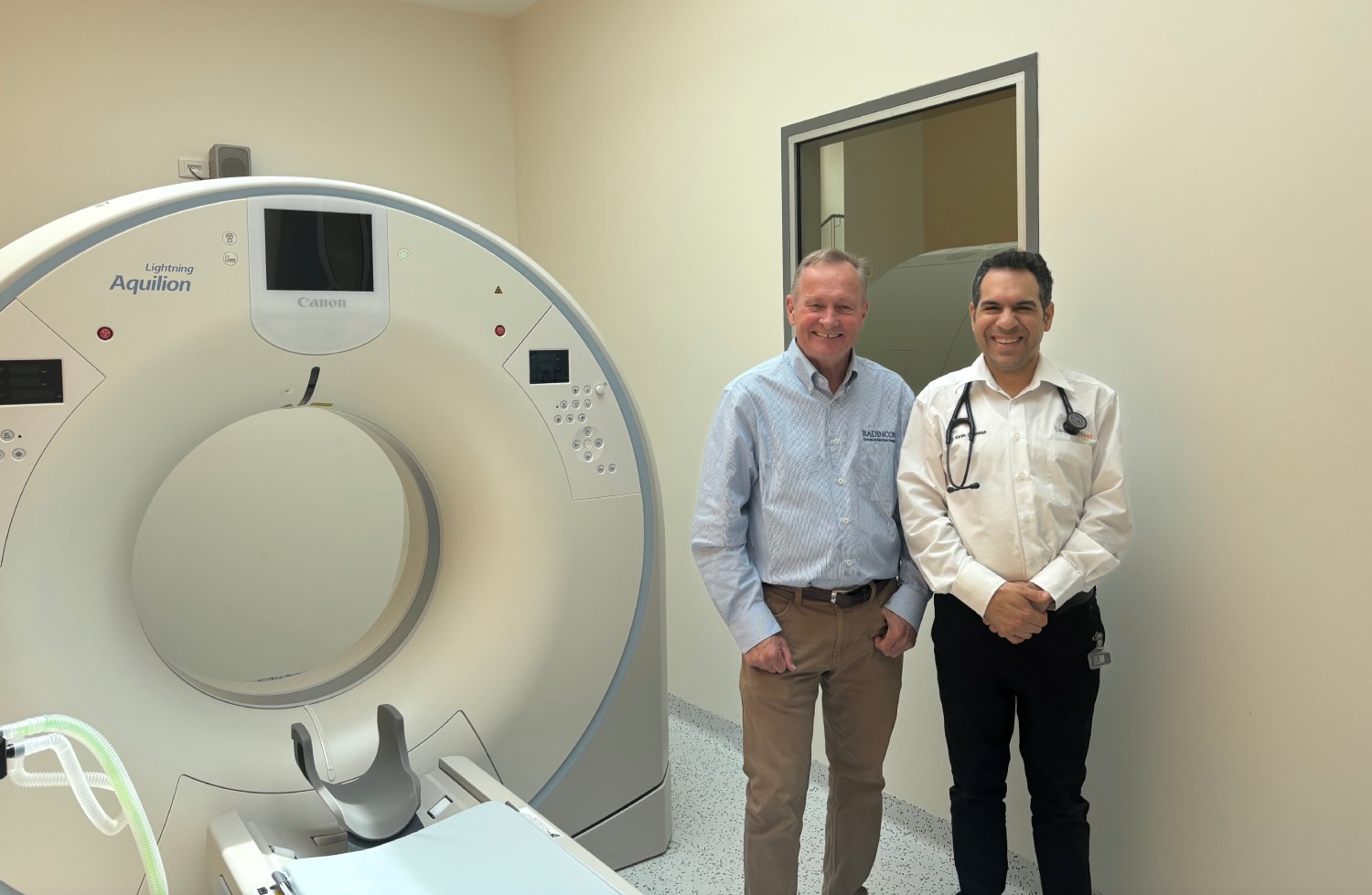
Today we’re catching up with Karim Chammas of Beecroft Vet to find out more about the Canon veterinary CT system he added to his practice earlier this year.
Why did you choose to add CT scanning equipment to your practice?
My vision has always been to make Beecroft Vet into one of the best clinics in Sydney – and a CT system has been part of that vision for a while. This year, we moved to a new premises, so it seemed like a good time to add the CT.
Getting the equipment in was a challenge, though. Access from the back of the premises was impossible because of the steps, and the system was too heavy for the wooden floor out front. We ended up creating a huge hole in the roof and using a crane to move everything in. Extra hassle and expense, but now we have a wonderful skylight which helps make the whole place brighter.
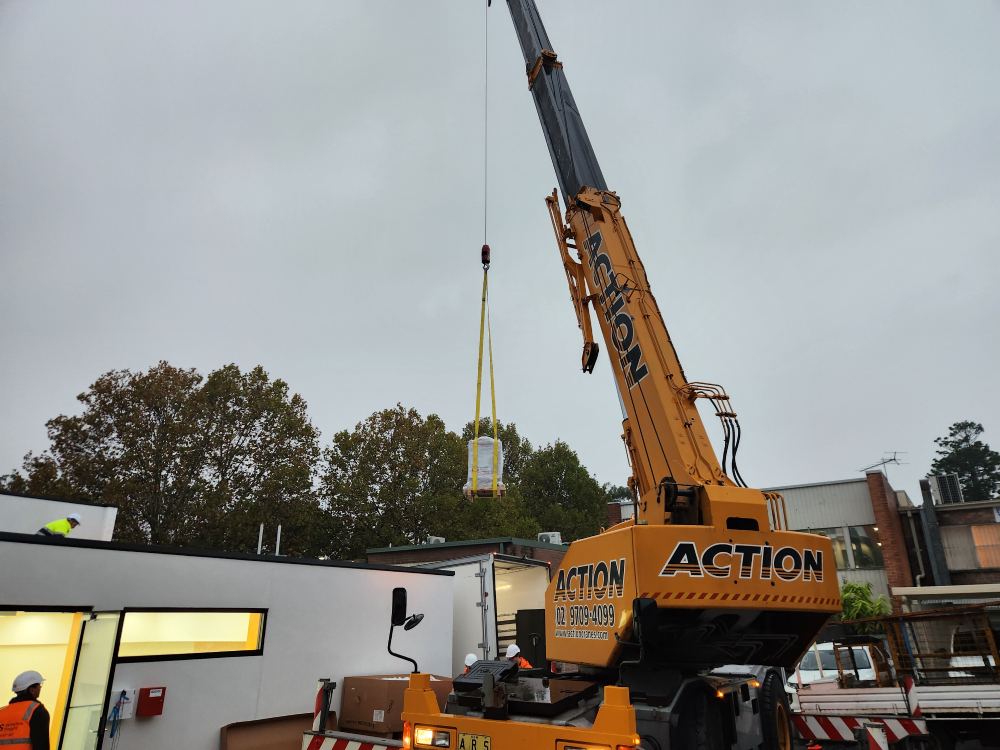
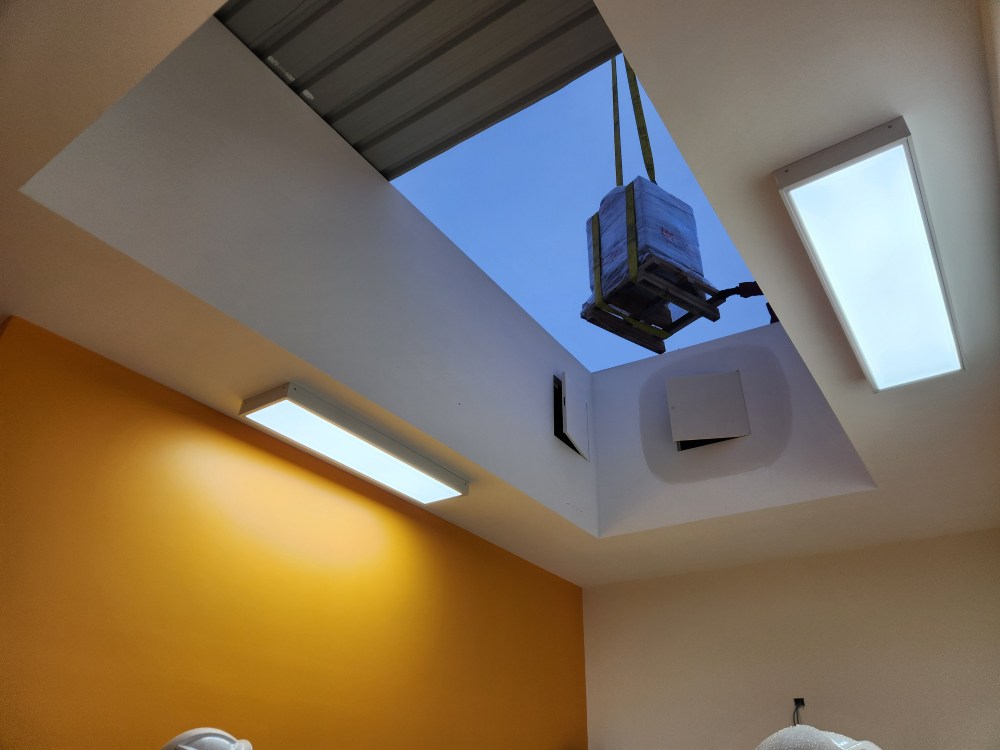
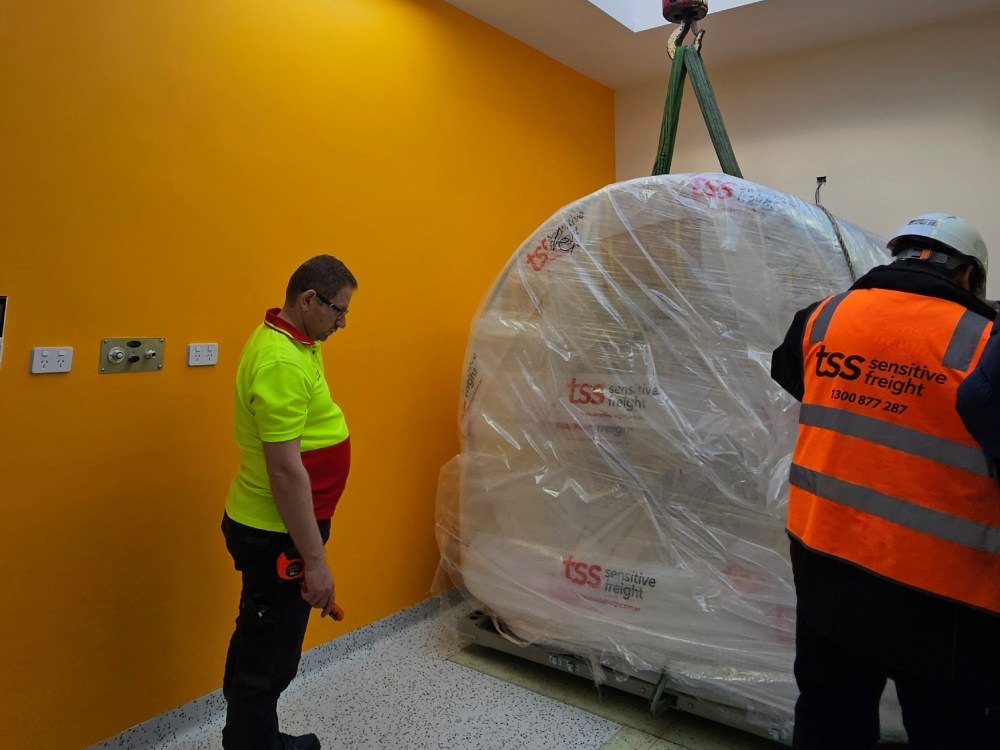
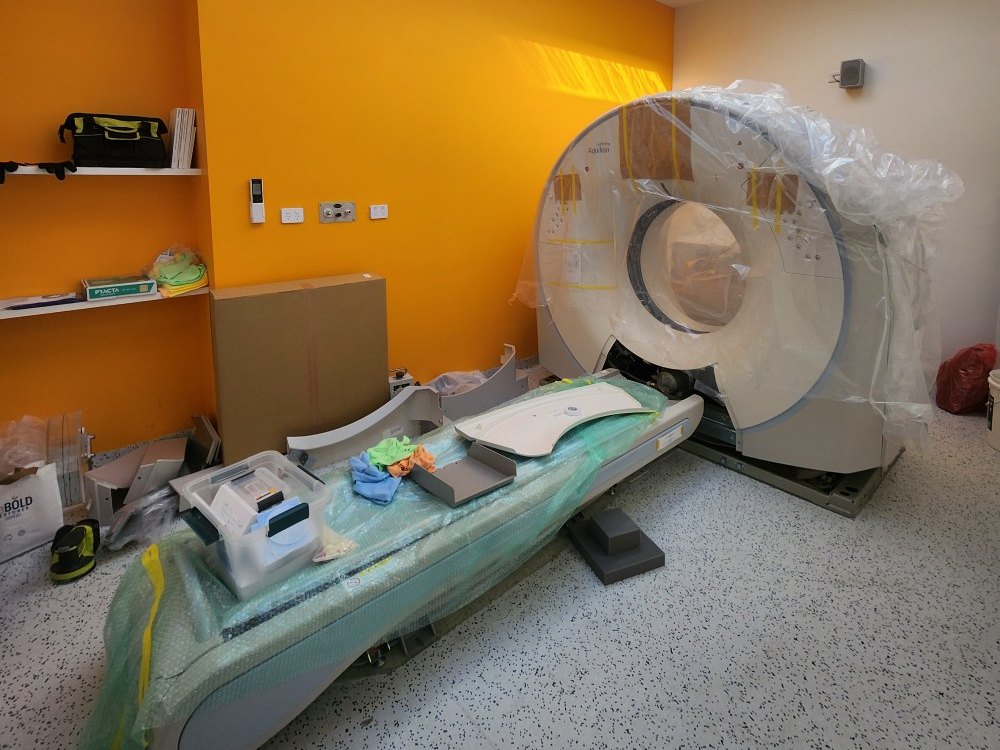
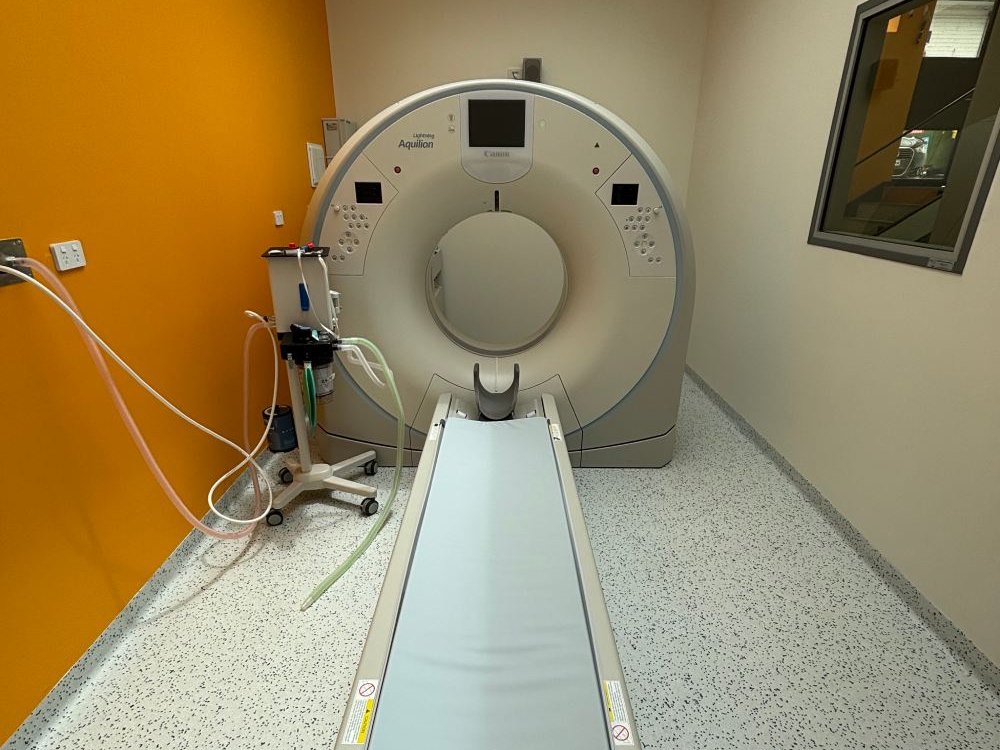
What the photos don’t show is how much heavy equipment on the end of a crane line can swing. For that, you need to watch the video.
How easy is the CT system to use?
Learning to use the CT was far easier than getting it into place!
It’s a pretty intuitive system, plus we had about two weeks training. Every vet in the practice knows how to use it, so whenever we’re open, CT scans are available.
We look after the positions, layouts and contrast to take the scans, then we send the images to independent specialists for analysis and reports via RocketPACS. We share those reports with our customers, whether they’re other local vets or owners whose pets we look after. Everyone gets world-class diagnosis.
What’s been your experience so far?
Amazing. We’ve had ultrasound and x-ray capability at the clinic since we started, but the CT takes it to the next level. Especially this one (the Aquilion Exceed LB) – it delivers 32 slices per rotation, so we get beautiful, high resolution images. I did a test scan on my own dog, Jet, and the intricacy of the nasal turbinates was incredible.
Plus, there’s the MPR (multiplanar reformatting) capability. The slices might all be parallel, but MPR lets us look at the data from different angles. It’s excellent not just for diagnosis, but for planning surgery, if there’s going to be surgery.
Diagnosis of an unexpected mass and subsequent prognosis
One of our owners brought his 15-year-old dog in because it kept coughing. We started off with x-rays, which showed the lungs were fine, but there was an unusual lump in the abdomen. So we performed a CT scan, which identified it as an extra-adrenal paraganglioma. I’d never seen this kind of neuroendocrine tumour before.
The tumour was pushing the organs out of place and causing the coughing, which was what we suspected when we first spotted it. But importantly, the CT scan also gave us a better image of the lungs. While they looked clear on the x-ray, we were able to identify that the tumour had spread. Surgery to remove the original tumour wasn’t going to solve all issues.
That extra information meant we could give the owner more information, and a clearer prognosis. Even though it wasn’t the desired outcome, he knew what was happening and could plan based on that.
A cat with a bleeding nose
Another sad case was the cat who came in with a bleeding nose. The first thought was that there was something in the eye, but we couldn’t find anything. Then we did a CT scan, which identified a tumour in the brain. It had eaten downwards into the nose, which was causing the bleeding.
It’s a sad fact about being a vet that the diagnosis isn’t always positive. But even in these cases, owners usually prefer certainty. It gives them some idea of what to expect, and often more time to come to terms with what’s happening.
Identifying the cause of a limp
There was a happier outcome for another dog we looked at which had an unexplained limp.
This was a referral from another vet, who’d already done x-rays. That vet, together with a specialist imaging vet and myself, all looked at the x-rays. None of us could find anything, which was why we progressed to the CT scan.
The CT picked up a number of things which weren’t visible in the x-rays and revealed a myriad of lesions that diagnosed elbow dysplasia. Now we knew why she was limping. In this case, the knowledge made a massive difference to treatment. The dog in question was still very young, barely a year old. The owner can now choose between managing the condition or possibly surgery to correct the elbows.
If they go with surgery, they have detailed knowledge to plan the operation. If they don’t, they can manage proactively throughout the dog’s life. In either case, the dog will have a happier, less painful life.
How has the veterinary CT system changed your business?
I think the examples above show it clearly. We can diagnose conditions more accurately and more completely. That means we can help more animals, often at an earlier stage, when we may have more options for treatment.
Easier and more affordable CT options
We always had the option to perform a CT scan, but before we had our own equipment, that meant sending the animal to a specialist vet facility. That wasn’t the best solution for several reasons:
- Sick animals generally don’t like to be transported all over the place.
- They’d end up with a vet they didn’t know, in a location they didn’t know, which means more stress for the animal.
- There’s a tendency for further treatment to continue at the specialist practice, whereas most owners would rather have their pet treated by the local vet who knows them already.
- Costs also tended to be higher. It’s not price gouging, but any facility which has so much technical equipment and operates 24 x 7 tends to have high overheads.
Now, with more affordable CT scans available, more animals are getting the scans, the diagnosis and treatment based on solid information.
Having the option to do everything locally is less stressful and more affordable for pets and owners, which means more animals can benefit from the technology.
Supporting other vets in the area
We’ve also seen other local vets coming to us for a CT scan. We’re not using the CT all day every day, so it makes sense to share our capability. Our charges are reasonable and we turn round results in anything from 24 hours to 2 business days. We share the full report with the vets, and they can choose whether to share with their customers.
Importantly, unless there’s some pressing medical reason for specialist intervention, primary care of the animal remains with the referring vet. So there’s continuity for both the vet and the patient.
Having veterinary CT available in the practice is a major plus. It improves what we can offer for our own patients, plus it gives other clinics in the area easier access to specialist scanning and diagnosis.
***
Thank to Karim for taking the time to talk to us about how he’s using his CT system. (And also for the great photo of him with the equipment and with Jim, which we used as a feature image for this article.)