
The Tom Quilty is unlike any ordinary endurance event.
As Australia’s National Championship Endurance ride, it attracts the country’s best endurance combinations. International riders compete for the famous Tom Quilty buckle too. This year some competitors travelled their horses from New Zealand, and several overseas riders leased Australian horses to compete.
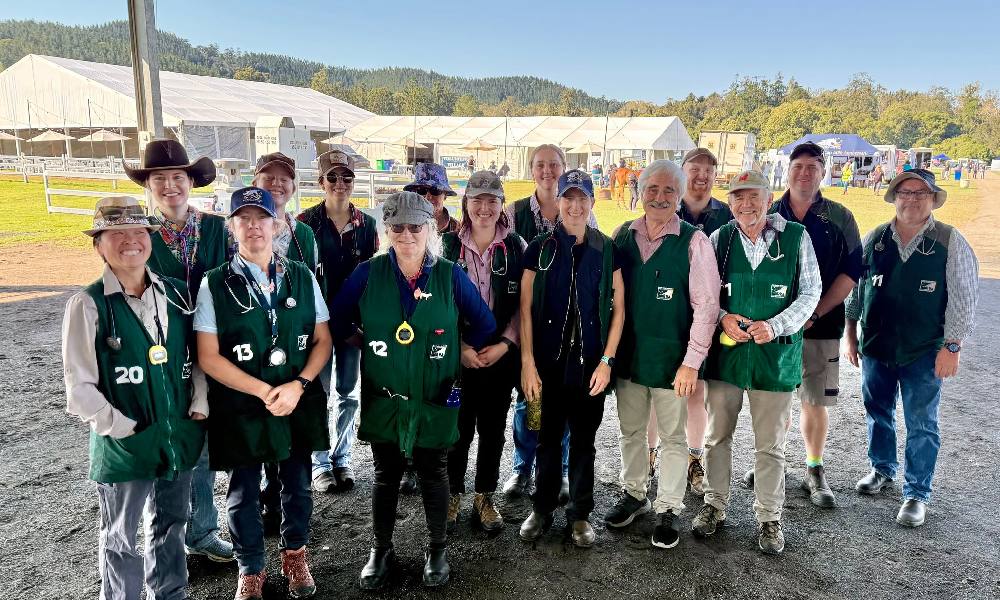
The focus is on the riders chasing the coveted Tom Quilty buckle. But behind the scenes, another highly skilled team is preparing for a very different challenge.
Even at the highest level of competition in endurance riding, equine welfare comes first.
That’s why the Equine Hospital exists.
Every minute counts when horses need care. The Hospital enables assessment and expert clinical decision-making immediately, on site.
A fully functioning pop-up veterinary facility, it provides advanced diagnostics and care which is normally available only in an equine hospital.
An Equine Hospital Built from Experience
Stirlings Crossing has hosted three Tom Quilty Gold Cups in the past six years.
During the 2019 National Championship, around twenty horses required treatment.
This highlighted the importance of having enough veterinary resources. Hospital capacity was significantly increased.
Veterinary protocols were also refined. They now encourage earlier intervention, as soon as there is any doubt about a horse’s ability to continue. These improved protocols have been highly successful.
In 2026, however, Dr Dave Nolan and the veterinary team were exceptionally busy. They treated almost twenty horses, for conditions ranging from metabolic compromise to significant orthopaedic injuries.
Bringing Diagnostic Imaging to the Equine Hospital
Radincon has supported the Tom Quilty Equine Hospital for many years. This year, we supplied almost $100,000 worth of diagnostic imaging equipment:
- Porta 100HF portable X-ray unit
- RadX DR Rover 820C Digital Radiography System
- GE LOGIQ ultrasound
- RocketPACS cloud imaging platform
The temporary hospital transformed into a sophisticated diagnostic facility. With high-quality imaging available in minutes, Treatment Veterinarian Dr Dave Nolan and his colleagues had invaluable information for urgent clinical decisions.
- Is a tendon intact?
- Is conservative treatment appropriate?
- Does this horse require referral?
- Can the horse safely begin the journey home?
Immediate answers let vets make better-informed decisions. They also mean less stress for both horses and owners.
How on-site diagnostic imaging made the difference for one horse and rider
One case Dr Nolan treated was the mare Wongaburra Wings of Fancy.
Wings of Fancy completed the 160km course with Alison Hegarty, experienced endurance rider and ride organiser. Sadly, she failed the final veterinary inspection due to lameness.
Like any owner, Alison hoped the injury would prove to be minor.
With a Radincon GE LOGIQ system at hand, Dr Nolan investigated immediately. There was no worrying wait while horse and rider returned home.
The scan confirmed a tendon injury requiring prompt veterinary management. Images were uploaded to RocketPACS and shared securely.
Alison’s own vet received and reviewed the studies. Treatment planning started before Wings of Fancy arrived home.
Alison later explained,
“Having such a well-equipped hospital on site is fantastic. I immediately knew the seriousness of the injury and could begin the appropriate treatment straight away. The fact that my own vet had the images before we even arrived home was a huge advantage.”
For veterinarians, this is how technology makes a real difference. It doesn’t replace clinical judgement – it enables it with better information.
Imaging for More than Orthopaedics
Not every horse presented with a visible injury.
The team assessed several for metabolic compromise and reduced gastrointestinal sounds consistent with exercise-induced colic.
Ultrasound was an invaluable extension of the clinical examination. With rapid imaging, vets could determine treatment.
Was urgent surgical referral required? Or would careful medical management, fluids and monitoring be more appropriate?
On-site diagnostic capability helped vets make important decisions, fast.
Going for Gold
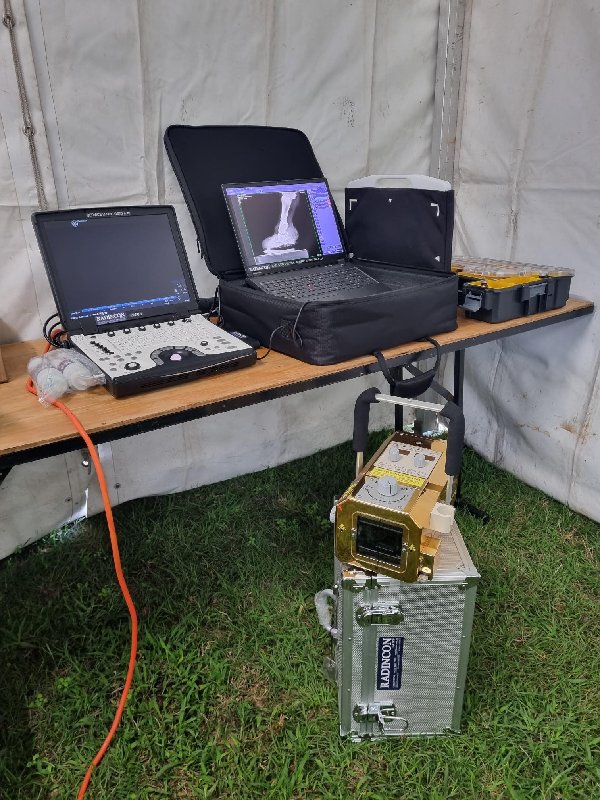
Every Tom Quilty produces at least one memorable story. This year, one story involved an X-ray unit.
Radincon has a national loan fleet of portable x-ray equipment. These units spend most of their lives at vet practices. They replace the practice’s own equipment when:
- a horse delivers an enthusiastic kick to a collimator
- a unit takes an unexpected dive from stand to floor
- the equipment simply needs servicing
Usually, there’s a loan unit available for the Tom Quilty Equine Hospital. But not this year.
That left just one option. Jon Marriott’s famous gold-coated Porta 100HF.
Jon first spotted this unit at the 2017 World Small Animal Veterinary Association Congress, on the Gold Coast. One of only five ever made, it now has a permanent home at Radincon. As a company icon it’s usually reserved for display, but for Tom Quilty 2026, it came out of retirement! Like every Porta 100HF, it performed exactly as designed, supporting vets when they needed it most.
Supporting Vets at Tom Quilty and Across ANZ
Most Tom Quilty spectators remember the thrilling finish, the buckle presentations and the celebrations.
The vets remember the horses which needed them.
For those horses, instant access to advanced diagnostic imaging wasn’t a convenience. It was integral to timely, informed clinical decision-making, at a demanding national event.
Supporting vets is – and has always been – at the heart of what Radincon does.
It’s why we have a national loan fleet keeping practices operating. Why we offer cloud technology connecting veterinarians across Australia. Why we supply imaging equipment to major endurance and industry training events. Whatever we’re doing, our goal remains the same:
Helping vets deliver the very best care possible – wherever their patients need them.
(Special thanks to Erle Levey for the photo we used as our feature image)